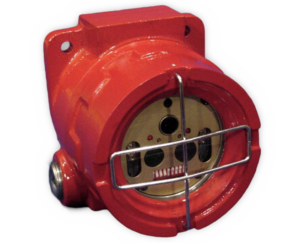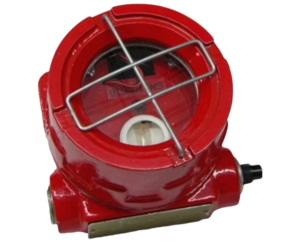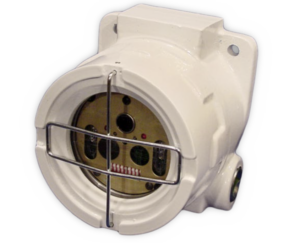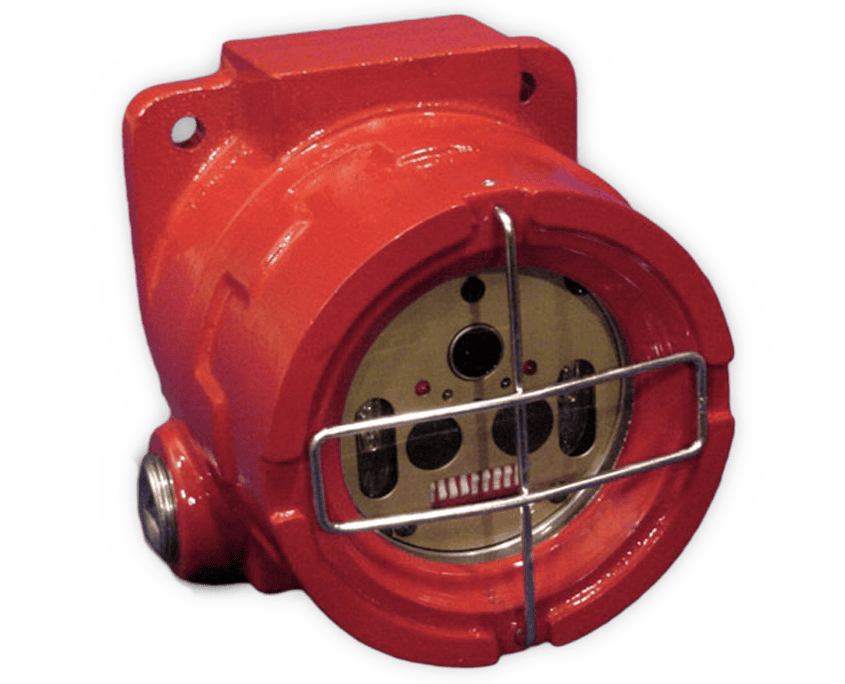
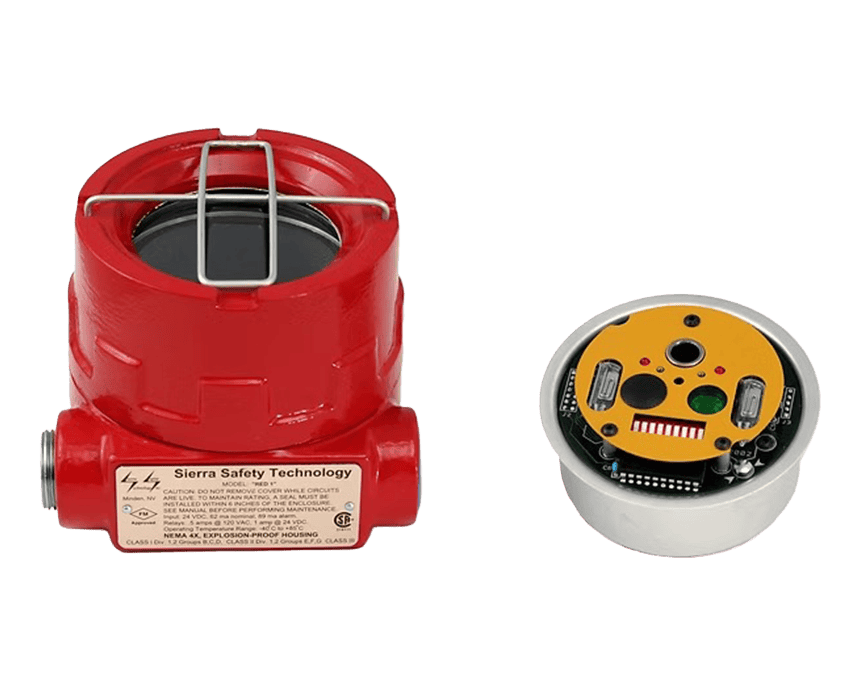
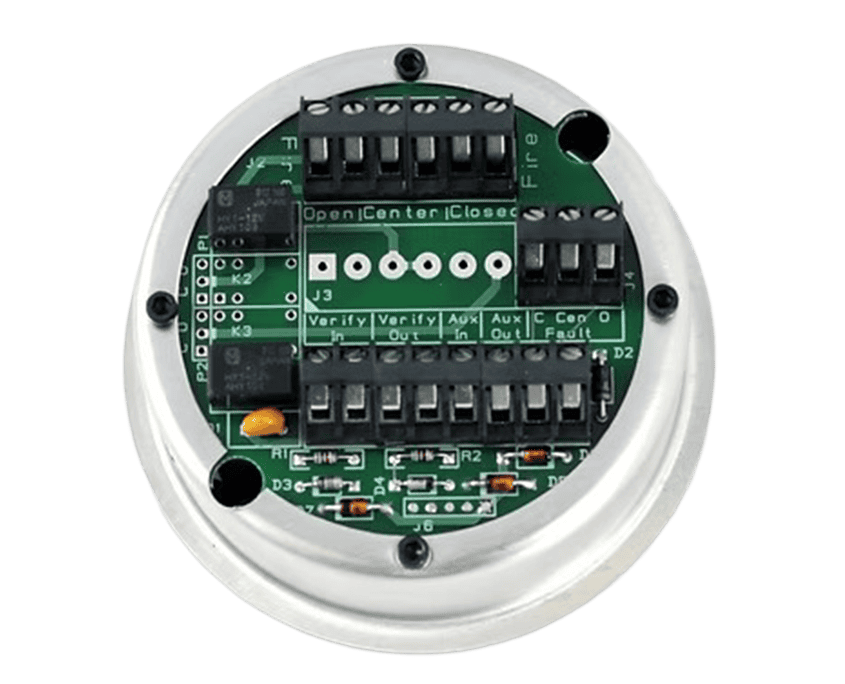
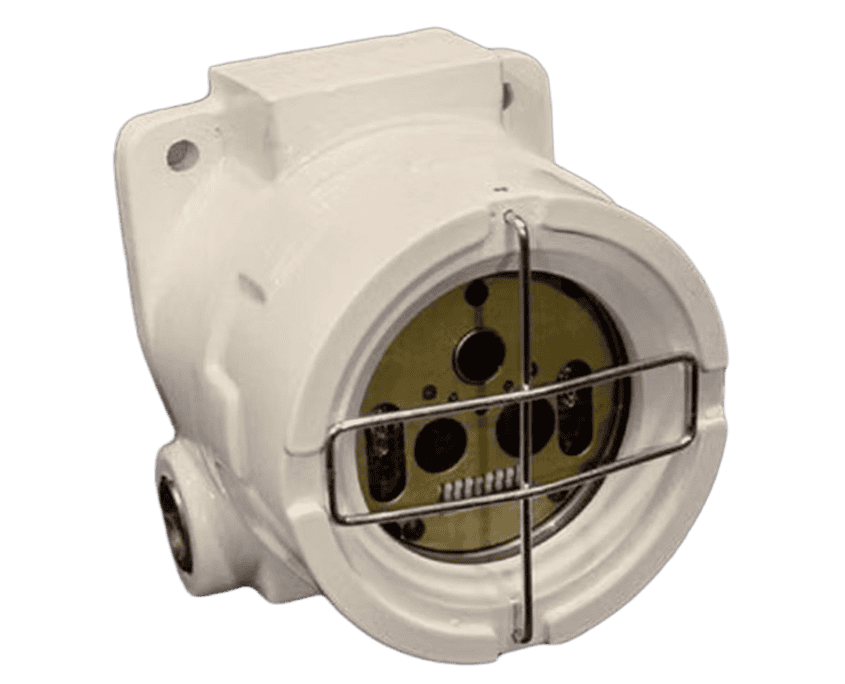
(RED1-E)
The Enhanced RED1
Advanced flexibility built on the proven RED1 explosion-proof platform.
(RED1-E)
Advanced flexibility built on the proven RED1 explosion-proof platform.
The RED1-E adds Verify Fire and Auxiliary Fault relay outputs to the standard RED1 platform. Detection performance, optical self-test, and hazardous area approvals remain identical to the RED1-ST.
Available in four factory-configured relay combinations (E1–E4), the RED1-E is selected when projects require verified fire confirmation as a separate output, auxiliary fault signaling for UV sensor integrity monitoring, expanded integration with multi-zone or tiered alarm architectures, or a path toward future system expansion.
If your project requires expanded relay functionality or advanced system integration, Sierra can help confirm the right E-model configuration for your control architecture.
Refineries, offshore platforms, and fuel handling operations requiring FM-approved explosion-proof detection in Class I hazardous locations.
Petrochemical processing plants with volatile organic compounds, high-temperature reactions, and strict compliance requirements.
Fabrication and process areas where rapid detection of specialty chemical fires supports facility-wide safety systems.
View available configurations, full product specifications, dimensions, and sensitivity ranges.
What is the difference between the RED1-E and the RED1-ST?
The RED1-E adds two additional relays (Verify Fire and Auxiliary Fault) via the J3 connector. Detection technology, sensitivity settings, field of view, optical self-test, and hazardous area approvals are identical to the RED1-ST.
What do the four E-model configurations mean?
Each configuration sets the factory default for the Verify Fire and Auxiliary Fault relays: E1 (N.O. Verify / N.C. Aux), E2 (N.C. Verify / N.O. Aux), E3 (N.O. / N.O.), E4 (N.C. / N.C.). The Fire and Fault relays on all models can still be connected as either N.O. or N.C. in the field.
How does the Verify Fire function work?
After the detector enters Fire Mode, the Verify Fire system evaluates flame signature certainty over time. Seven configurable levels are available, each adding approximately 5 seconds of delay. When certainty exceeds the set level, the Verify Fire Relay energizes as a separate output.
What does the Auxiliary Fault Relay monitor?
It activates when UV sensor integrity is compromised — typically from lens contamination that absorbs UV energy. This provides a dedicated fault indication separate from the standard Fault Relay.
What is the operating temperature range?
Operating: −40°C to +85°C. Storage: −55°C to +110°C.
Can the RED1-E be daisy-chained with other detectors?
Yes. The Fire Relay (J2), Verify Fire, and Auxiliary Fault (J3) connectors all include dual terminals to support daisy-chaining multiple RED1 units.